
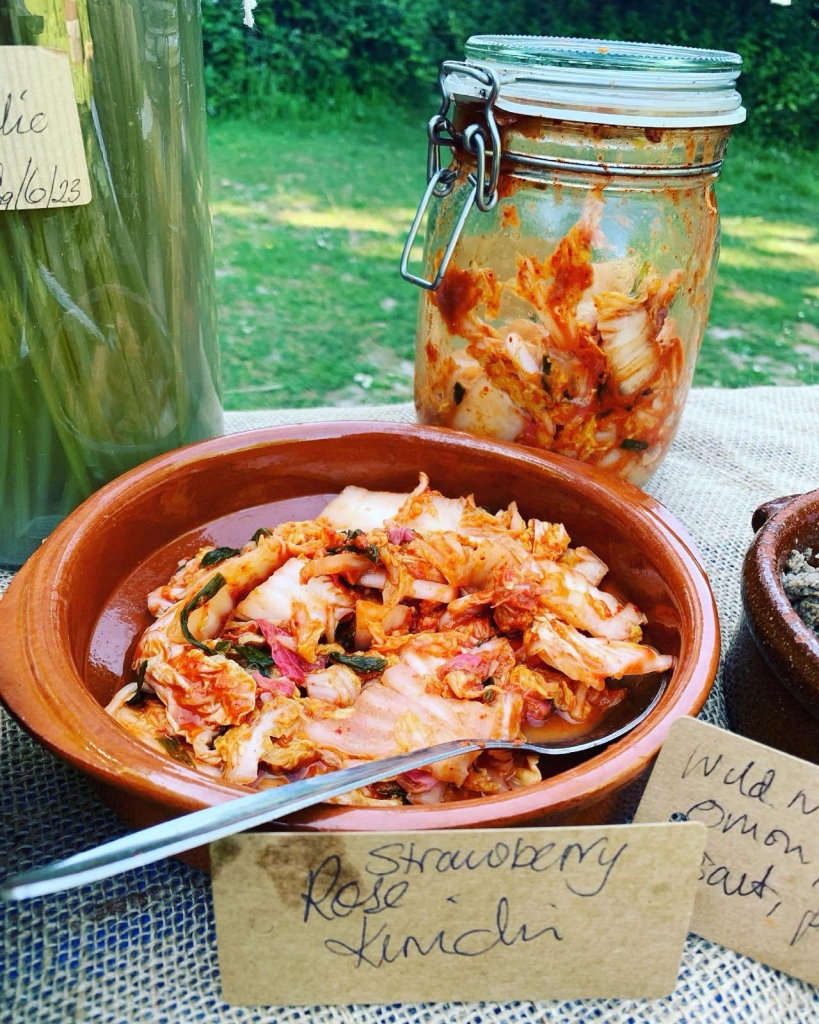
Back in the Summer of 2023, Jelena Belgrave, a wonderful London based fermenter and a group of lady fermenters organised a wonderful gathering in London celebrating fermentation. Mara King and Kirsten Shockey, two very talented, inspiring and knowledgeable American fermenters gave demos and this recipe came off the back of that and I really enjoy making it every year when the Japanese rose arrives and the delicious strawberries too.
What I love about this is, is it is an adaptation of a loved ferment recipe to capture the season and create amazing foods with what we have at hand, which is how there is at least 200 varieties and provincial Korean recipes in Korea, based on what was regional and available to ferment. In this case, we had chives, and rose in the garden, local strawberries, and apart from the Chinese cabbage and apricot, that are both in season, we always have the other ingredients in the house as lovers of kimchi.
The photo above shows a version of this kimchi being enjoyed at a forage and ferment workshop which went down well!
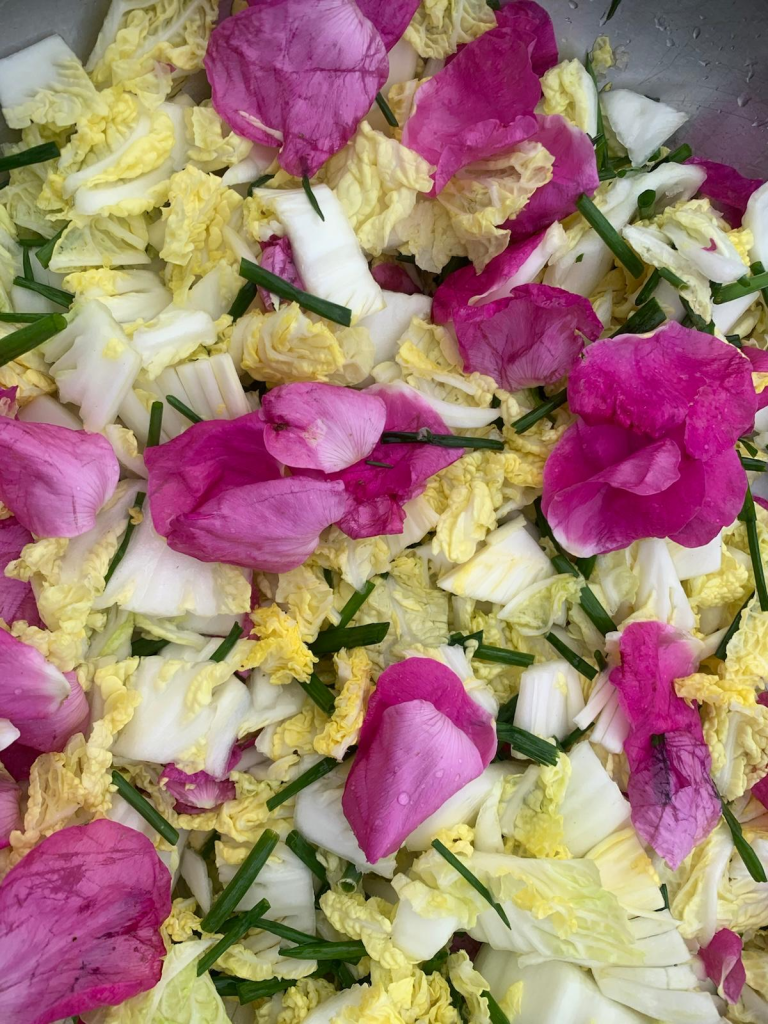
Ingredients:
1 napa/chinese leaf cabbage
1 handful of chives
1 handful of rose petals
1 handful of strawberries
2 apricots stoned
4 tbsp of korean chilli flakes (more to taste) (or use another chilli if you do not have korean chilli flakes)
1″ finely grated ginger
1 clove of garlic smashed and finely chopped
Chop the chinese leaf cabbage into 1″ square pieces. I do this by halving and then quartering the chinese leaf cabbage lengthwise and the cutting across to make the square pieces. Weigh the cabbage and add a 2% salt to it and mix the salt into the cabbage. Chop the chives and separate the rose petals. Add the chives and rose petals to the salted cabbage. Leave that to one side.
Create a paste with a good handful of strawberries, 2 apricots stoned, 4 tbsp of korean chilli flakes, a sprinkle of salt, a 1″ finely grated ginger, 1 smashed and chopped garlic clove (This less than the usual amount I use in a kimchi so not to overpower the other flavours) but you can experiment and create what you would like!
Add the paste to the Chinese cabbage and massage together and then jar up and seal safely. This is a fast ferment due to the sugar content in the fruits, the temperature is usually warmer at this time of year. This can ferment within 24hours. I was happy with this after a day and a half. I would place a bowl underneath the ferment to capture any liquid pushed out of the ferment.
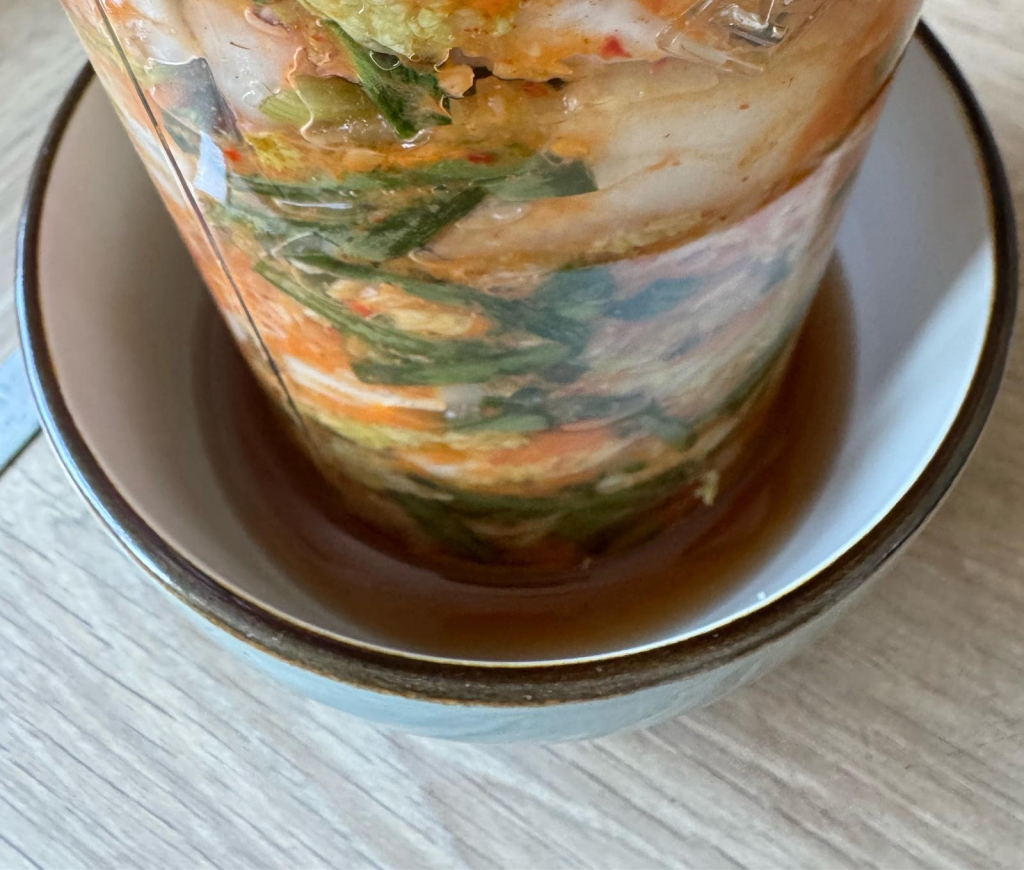
This was popped in the fridge and eaten within a week!
What pleased me most was that my mum, who had been poorly for a while with her tum, she had a big thumbs up for this.
What do you have at hand? What could you make?
For more inspiration and ideas along this journey of fermentation and for workshop information, please add your email to the newsletter.
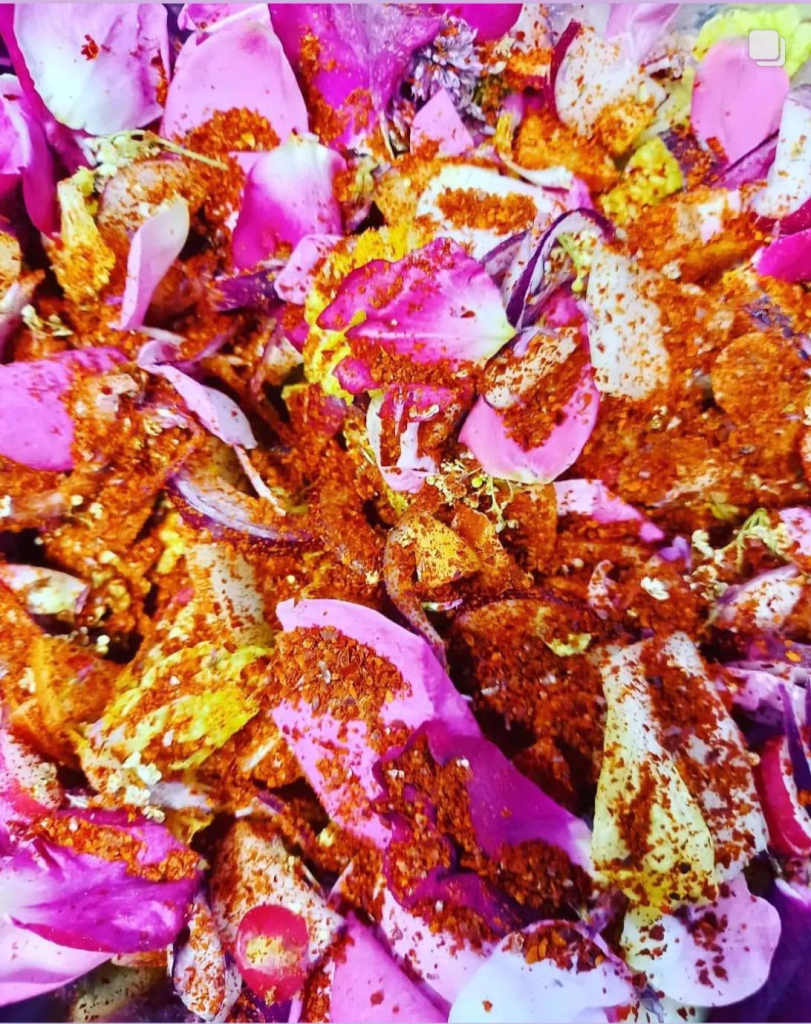
The colours!!!