
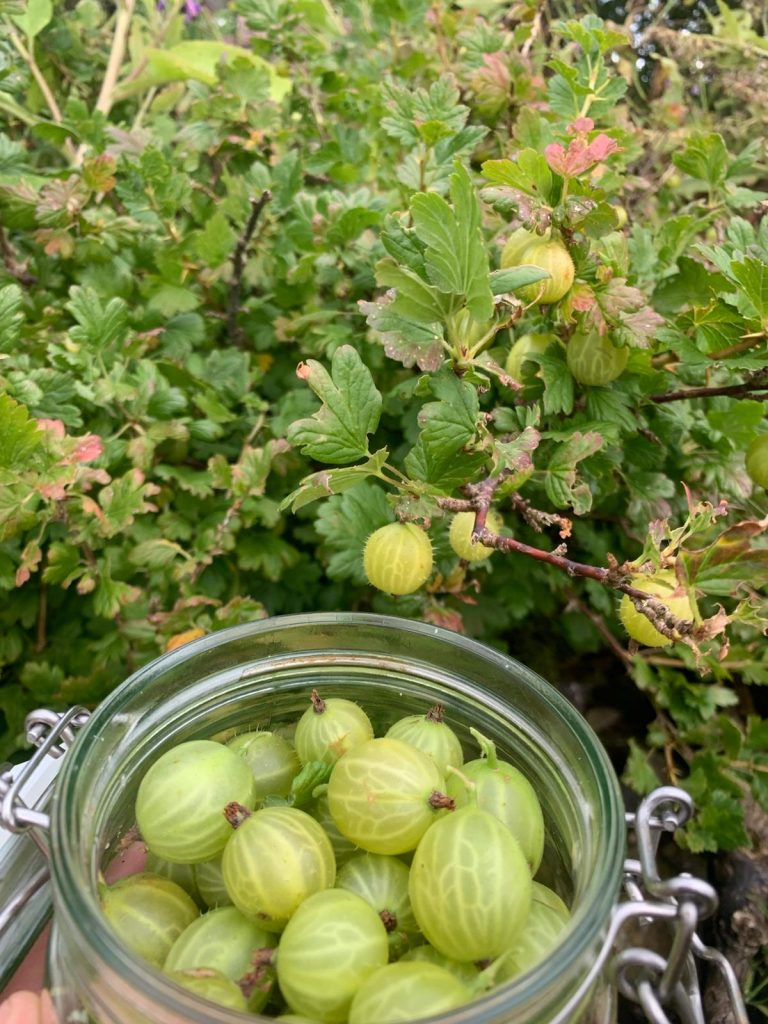
Gooseberries and elderflower really go well together and years ago I started to create a ferment combining the two flavours. Imagine the tang of the gooseberry with the floral notes of the elderflower. This then worked to compliment some smoked mackerel. Since the elderflowers have had a long season this year, it is still possible to get out there and forage some for this delicious relish and gooseberries are coming along nicely.
Gooseberries can be fermented with dill really well, and as a salsa with fresh coriander, chilli, garlic and all the ingredients that you would use for a tomato salsa but using the gooseberries instead and I am pretty sure I have fermented them with sweet cicely before now. Fermented gooseberries are a really treat and perhaps not a way that is typically used for gooseberries but well worth it!
I think apart from using lots of sugar with them we don’t use gooseberries to their full potential, let me know if you come up with any other wonderful ways of using them that does not entail loads of sugar..
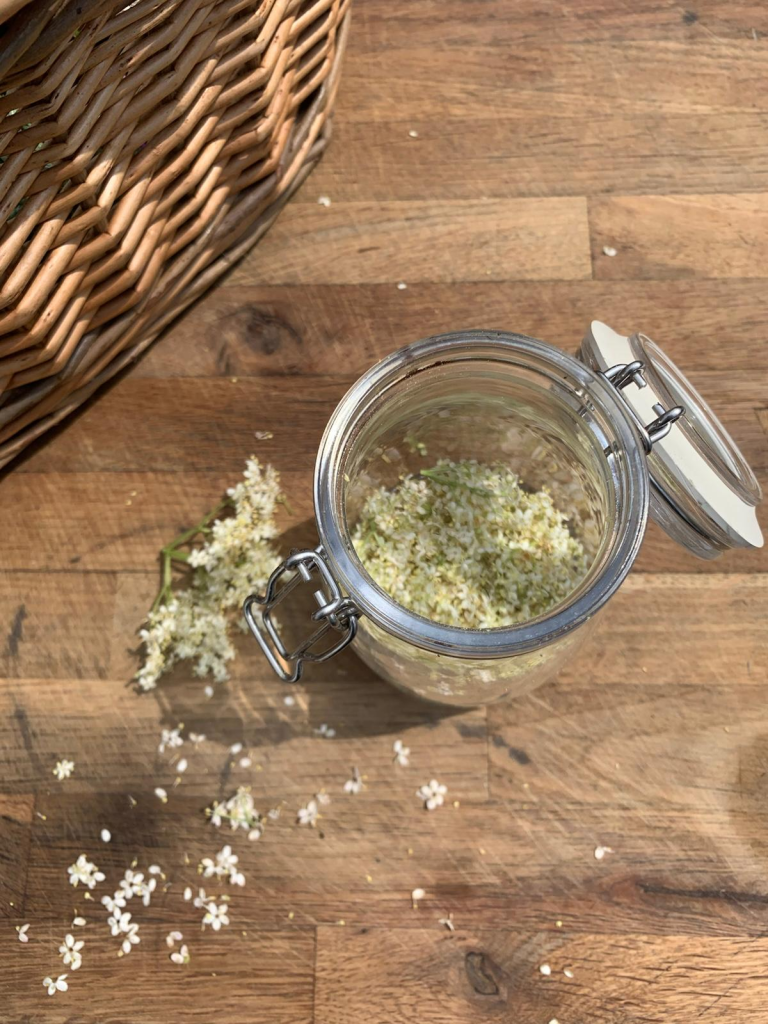
Ingredients:
300g of fresh gooseberries
5-6 flower heads of Elderflower
500ml of filtered water
3% salt by weight of all the gooseberries and the elderflowers
Instructions:
Before starting it is good to have hot washed or sterilise a 1 litre clip top jar for this recipe.
Wash the gooseberries and nip off the stem and the dried flower blossom, “top and tail” them as my Nan would say. Don’t use any bruised fruit for this recipe and prick the gooseberries a few times, especially if they are not very ripe.
I like to remove the stems of elderflowers. Some folks may be happy to use the head of the elderflower and remove it after the few days of fermentation. (It is worth noting that the stems and the wood on Elder are toxic) I prefer to remove the stems. Place the flowers in first and then the gooseberries and then pack the gooseberries in and fill the jar.
Prepare a saltwater brine by mixing 25g per 1 litre of warm, filtered water, ensuring the salt is entirely dissolved. Usually I use 2% brine but if there is an element of liquid exchange from the gooseberries then I will up the salt to 2.5% or 3%. Not to high a salt content in case it slows the fermentation down. Some recipes I have seen, have added a little sugar to speed up the fermentation process. I am happy that the bacteria and yeast on the flowers and the gooseberries are enough to kick start the fermentation process.
Pour the brine over the gooseberries until they are completely covered. It is important that everything in the jar stays under the brine “Under the brine and then you are fine!” to prevent mould from arriving on the surface. Use a glass fermentation weight, or a clean, food-grade freezer bag filled with brine water, to hold the gooseberries and the flowers down.
Close the clip top jar lid (Or whatever air lock method you are using) and leave it at room temperature (around 18°C to 22°C) for 3 to 7 days. Taste the gooseberries after 3 days; they should become tangy, fizzy, sour and the flavour of the elderflower should be there and once it is how you like it, the water will have gone opaque, then pop in the fridge. You could leave the gooseberries whole, or coarsely chop to make a relish and enjoy with cold meats, mezze boards, or with fish and cheese.
Fancy learning more? Book onto one of Emma’s Workshops and create your own.
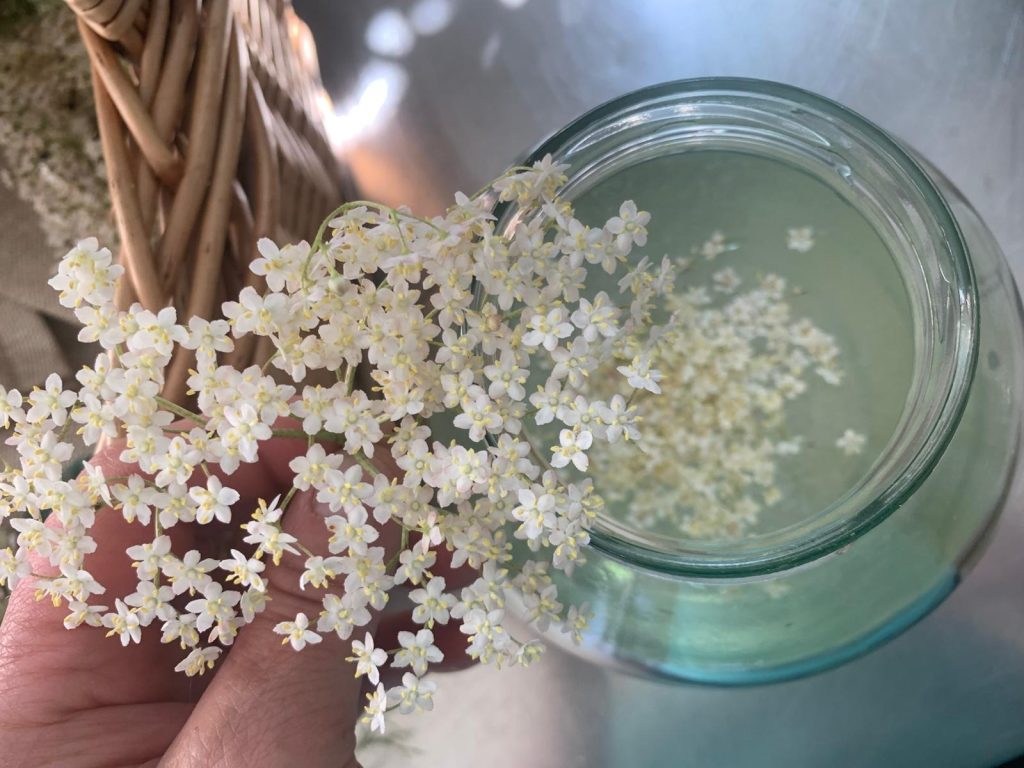
A close up of the elderflower petals.