
Magnolia Magnificance
Magnolia Magnolia sp
The Latin name Magnolia for this family name of shrubs was named to honor the French Botanist Pierre Magnol. Pierre Magnol was an innovator and involved in the creation of the classification of plant families. It also comes from the latin name Magnus meaning “Great” or “large”
Where to find:
Magnolias are actually non native to the UK. So you will mostly find them in people’s gardens and National gardens and Parks. The shrub itself is ancient historically with evidence of it going back to 95 million years ago.
Edible
These flower petals are edible, (Here is a list that Robin Harford has compiled of recorded edible Magnolias Eatweeds – List of edible Magnolia to be sure. They have no known toxicity to them and they have a surprisingly pungent spicy, gingery and cardamon taste to them. Some are tastier than others. For the edibility of the Magnolia’s I would like to share Kim Walker’s blog post who collaborated with ethnobotanist Harriet Gendall in 2019. Kim’s post shares the difference in flavours with the shades of the petals.. It’s worth noting that different Magnolia’s will taste slightly different.
Magnolia petals are edible raw, cooked, fermented and pickled. I will add a sweet pickled Magnolia recipe as that is one of my favourite ways to eat the petals.
Magnolia a foraged Spice Cupboard
Indentification
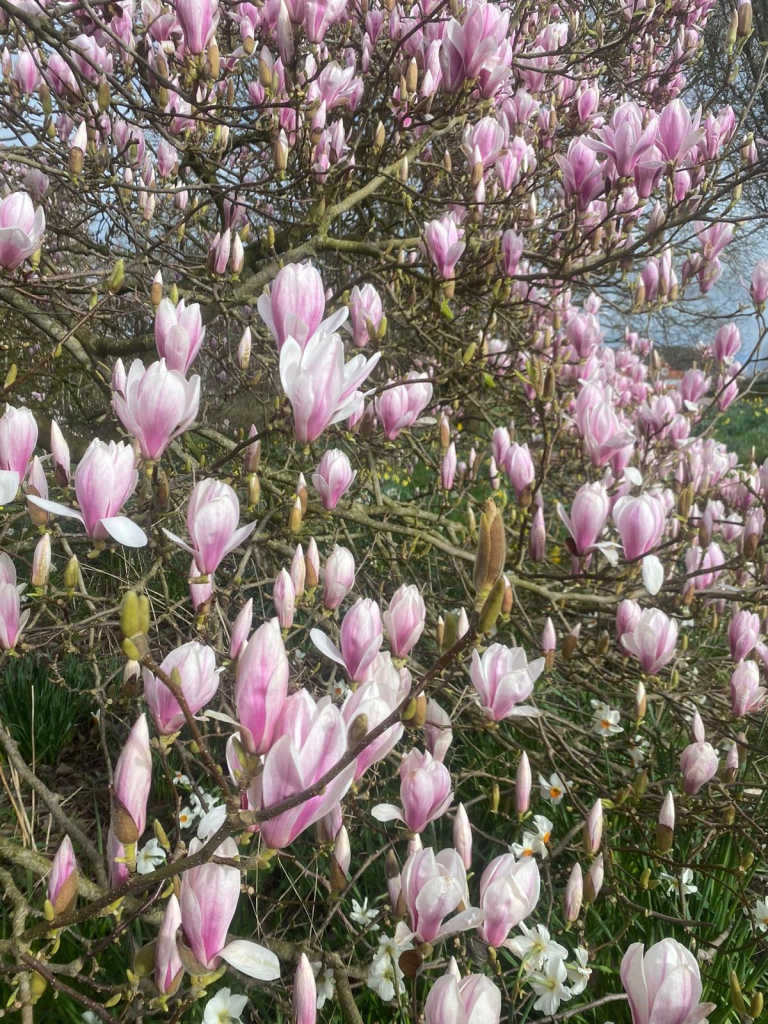
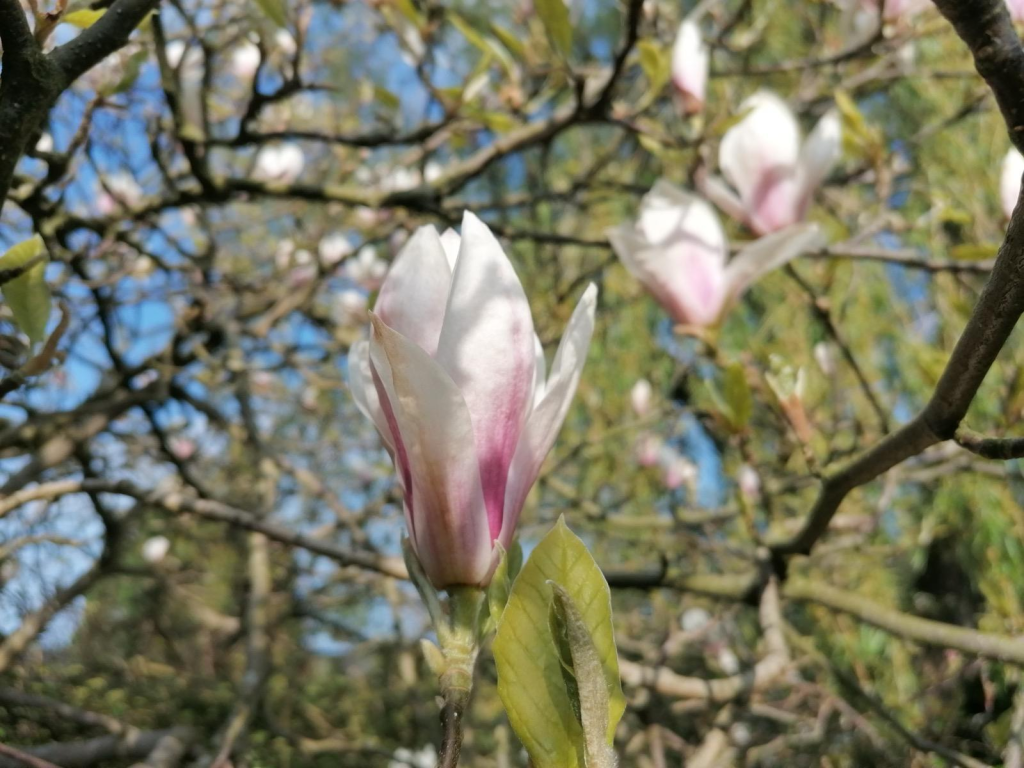
Magnolias are known for their stunning large blossoms that arrive to announce that Winter is almost over and we are heading well into Spring! Magnolias have large, thick petaled (tepals) in shades of white, pink, purple and yellow and they are in full bloom early Spring in the UK. They open upwards from a bud into what looks like a goblet of blossoms. The centre of the blooms look like a tiny little pineapple! Interestingly, these flowers being 95 million years old evolved to be pollinated by beetles way back when!
Looking into the Magnolia family, Thomas Elpel in his wonderful book Botany in a Day (6th edition), shares that there are 7 genera and about 220 species in the magnolia family.
Lookalikes
There are no toxic look alikes.
Harvesting
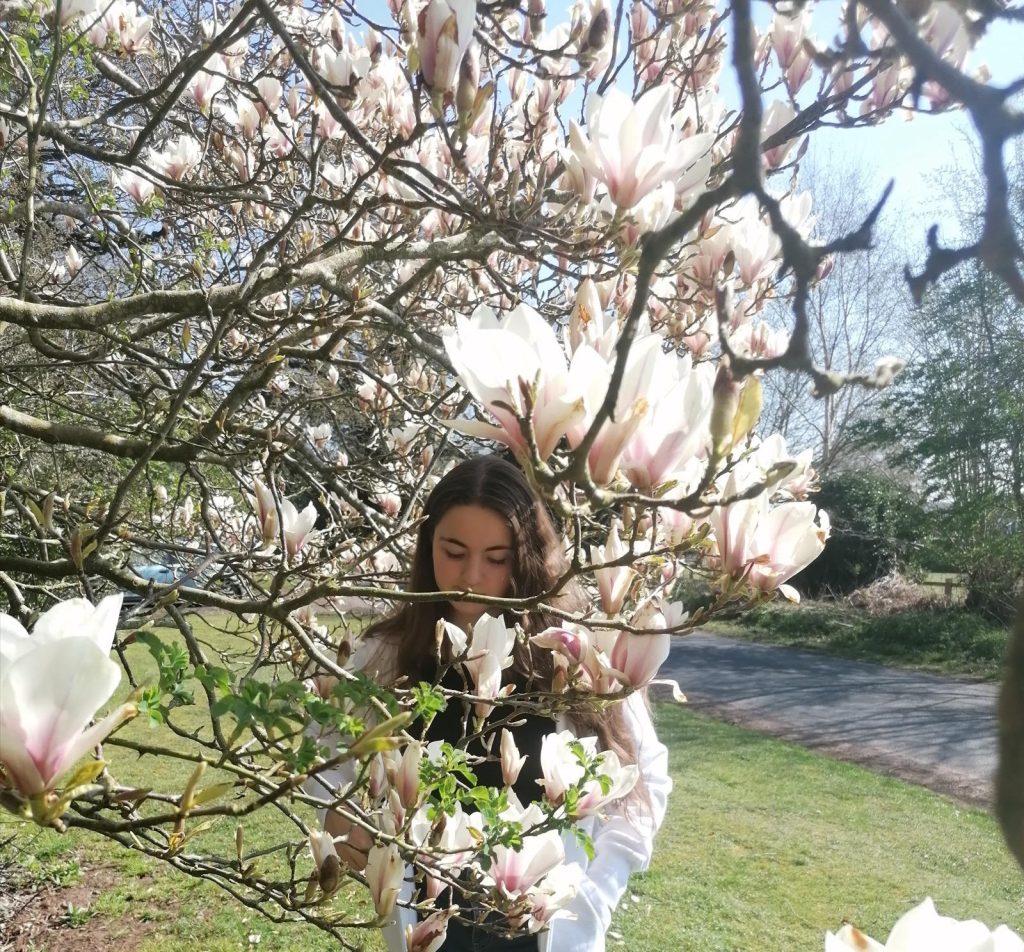
Leave the majority of flowers on anyone shrub for pollinators. Gather small handfuls rather than branches full. Avoid harvesting from trees along busy roadsides where flowers may be contaminated with fumes or heavy metals and simply enjoy these flowers this Spring whether they are on the shrubs or in a jar!
References:
Thomas Elpel in his wonderful book Botany in a Day (6th edition)