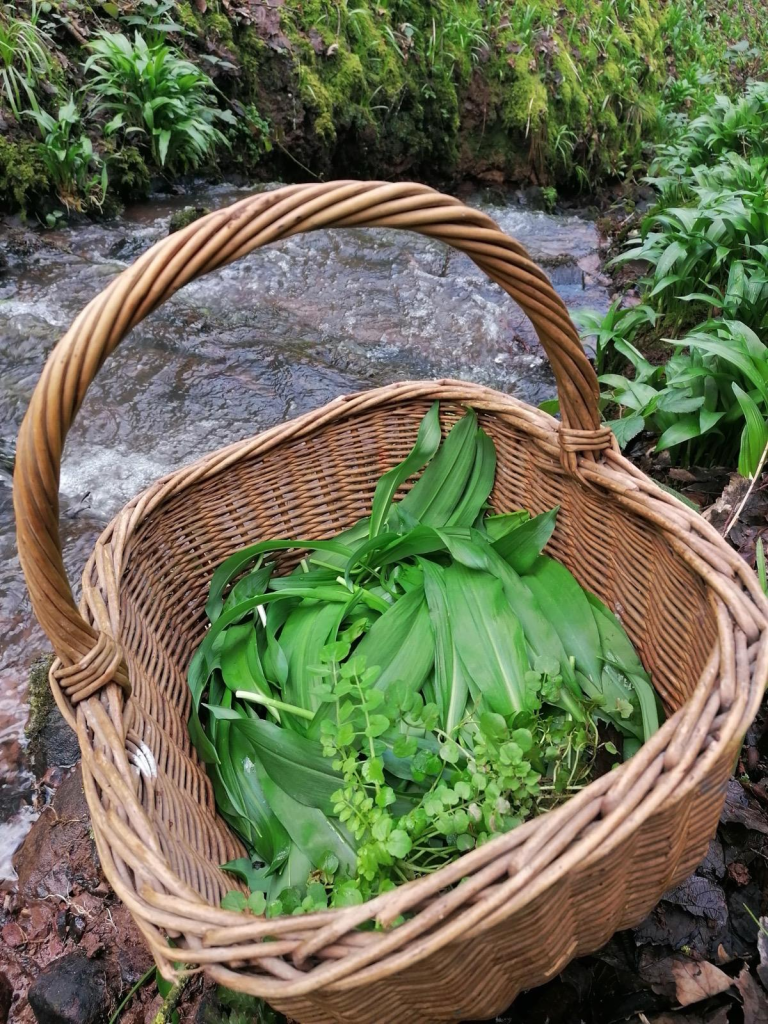
Wild Garlic (Allium ursinum)
Wild Garlic (Allium ursinum)
Common names: Bears garlic, Bears leek, Ramsons, Wood garlic, Broad Leaved Garlic
The latin name ursinum refers to the fact that the bears used to like to eat the wild garlic.
Now is the time! That pungent garlicy smell is unmistakable and so welcome!
If you are new to foraging this is a great place to start.
The season seems to be moving forward every year in the UK for this native plant. I have started to find Wild Garlic peeking through the ground as early as late November. At this time of year I am not ready for the craziness of Spring foraging to kick in, I am in deep hibernation and in a much slower pace of living. As I get older I am sinking more into flowing with the seasons this way. So Wild Garlic in November jars me a little!
However, now is the time to get out there and see it grow to a size that we can start picking it and start to really enjoy the season as it stretches across Spring.
There is much I have to share about this amazing plant. Many of you I know recognise it and it is a much loved wild green by many and one that many of us wish to really get to know well.
I would like to share how to sustainably forage this delicious green so that we still have this amazing food for years to come, poisonous lookalikes, what to do with the wild garlic when you pick it. The list is endless to be honest! It might take a few blogs or a book to share all with you.
Let’s start with where to find it!
Where to find Wild Garlic?
Wild Garlic loves damp and shady conditions, so woodlands and forests are its home. (Wild Garlic can be an ancient woodland indicator.) It starts to arrive in Winter and grows through the Spring to late Spring before dying back. Quite often, using your nose, you can find Wild Garlic as the garlicy smell wafts through the breeze through the woodlands it resides in. As it likes damp areas, so I tend to head for riverbanks as well if I am seeking Wild Garlic.
Wild garlic likes to grow in little clumps and then can be found to be a carpet coating a woodland floor in swathes of these little clumps.
Edible?
All of the plant is edible, from the shoots, leaves, stems, flowers, bulbis, seeds to the bulbs*.
(*Please note that it is illegal to dig up roots and bulbs without the owner’s permission. The wild garlic bulbs don’t have the same tasty intensity of flavour as the leaves, so I would focus on the rest of the plant and leave the bulbs so we have Wild garlic to keep enjoying from years to come)
Identification
A wild garlic leaf is long, spear-like and tapered to a point leaf, that grows from the base and has a stem. They can be between 10cm to 30cm in length and between 3 to 6 cm wide at the widest point. The leaves are smooth and a vibrant green, with a single vein running through it and finally the leaves have that unmistakeable oniony garlicy pungent smell to it. These leaves are attached to bulbs like spring onions, so when picking the leaves try not to pull up the bulbs.
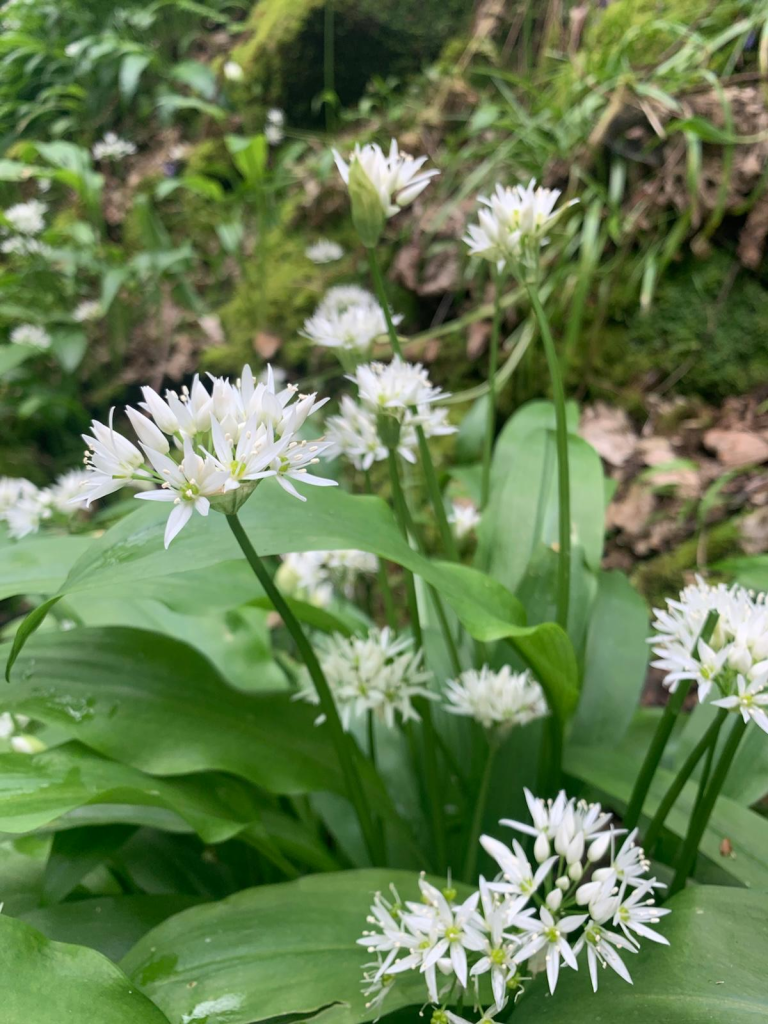
The flowers are star shaped groups of tiny white flowers with 6 petals. There’s about 25 of these little flowers on a thin stem. The long thin stem has a triangular cross section to it.
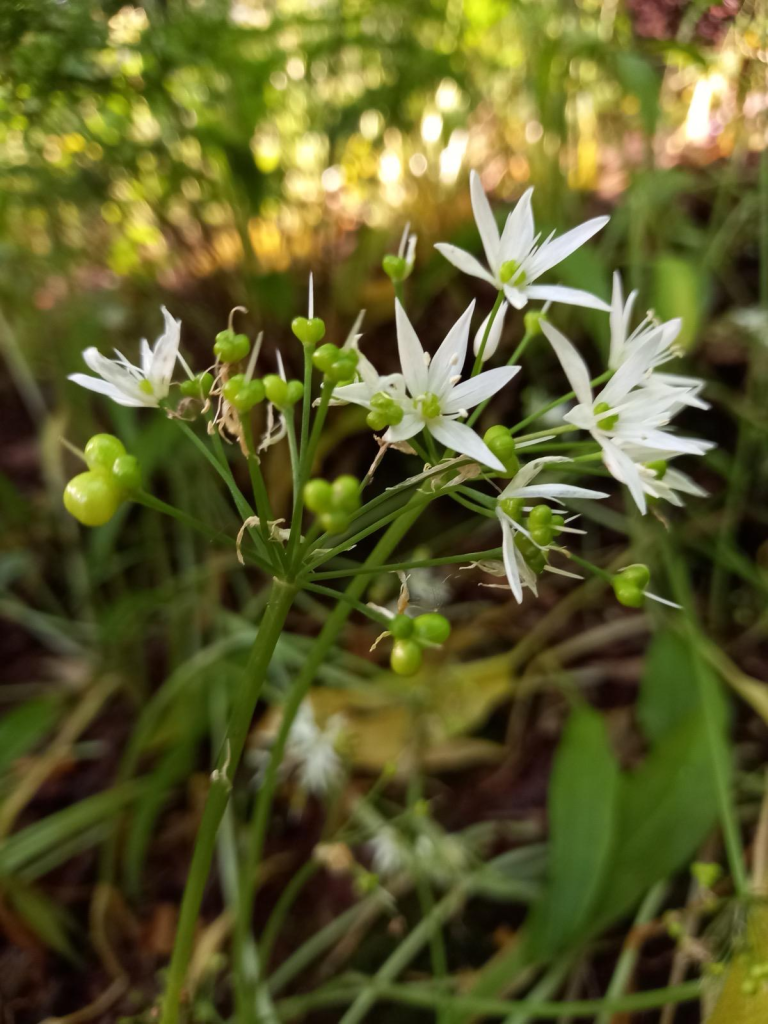
Eventually the seeds take the place of the flowers. These are little green poms poms and then they turn black right at the end of the season. These then get dispersed when the plant dies back.
Lookalikes
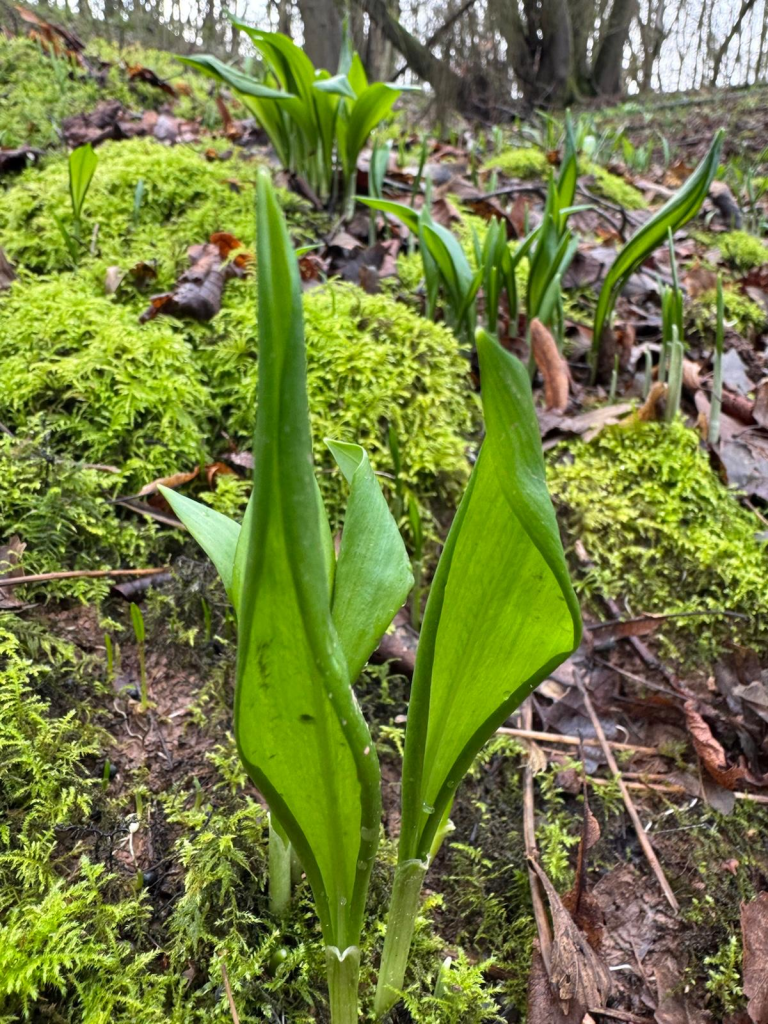
There are a few to consider especially at the beginning of the season. Let’s start with Lords and Ladies (Arum Maculatum) This plant comes up at the same time at Wild Garlic and I have seen professional foragers accidentally pick this with their wild garlic harvest and heard of people accidentally picking a leaf and eating it thinking it was wild garlic. If you eat this plant, it is like eating glass shards and can be extremely painful. I will create a post for the identification and more information on it soon.
Lords and ladies have large glossy arrow-shaped leaves and have two distinctive little points the end of the leaf. They also have a vein that runs closely to the edge of the leaf. When Lords and Ladies leaves come up and unfurl they can be mistaken for Wild Garlic as the plant matures in growth it is much easier to identify.
Lily of the Valley (Convallaria majalis) is another highly poisonous plant that could be mistaken. It does not smell of garlic and the Lily of the Valley can have 2 or 3 leaves on a stem that splits further up the stem. The flowers are bell shaped not star shaped like the wild garlic ones.
Another poisonous plant to be aware of that can grow in amongst Wild garlic but does not look like it, but could be accidentally picked along side is Dog’s Mercury (Mercurialis perennis)
The rule of thumb for foraging is.. If in doubt leave it out, and never munch on a hunch!
Sustainable harvesting.
I spoke to a wonderful woman who has harvested wild garlic for making Wild garlic cheese for 30 years. I pick from one of the places she used to pick from for the last 10 years and we talked sustainable picking. She pointed out after so many years of picking and rightly so, that if you heavily pick from one clump, from one area and take all the leaves from clumps or cut large swathes, the plant will be weaker, the patch will become thinner and less of the wild garlic. The plant needs photosynthesis to put energy into the growth of the plant and bulb to come back next year. You remove all of that by removing all of the leaves, it is impossible to come back strong. So many of us are looking to forage now so it is so important that you look after the Wild garlic so it comes back again strong the next year. It is not just us that depend on the survival and but the whole ecology that this plant belongs to.
I have heard from various sources that particularly in urban areas and more public places that Wild garlic is retreating and patches are becoming smaller with over harvesting, or that folks have gone to the patch they pick from to find it has all been cut and taken leaving nothing for nature and others.
So it is good to pick a few leaves per clump of Wild garlic, move to further within the area of wild garlic growth rather than on the fringes. Pick what you need and can process in anyone time. Try to spread out where you are picking from and try to tread lightly so it looks like you have not even been there!
Happy Foraging!
Recipes are on their way!