Sweet Pickled Magnolia petals

Forage, Magnolia, Recipes, Spring | 0 comments

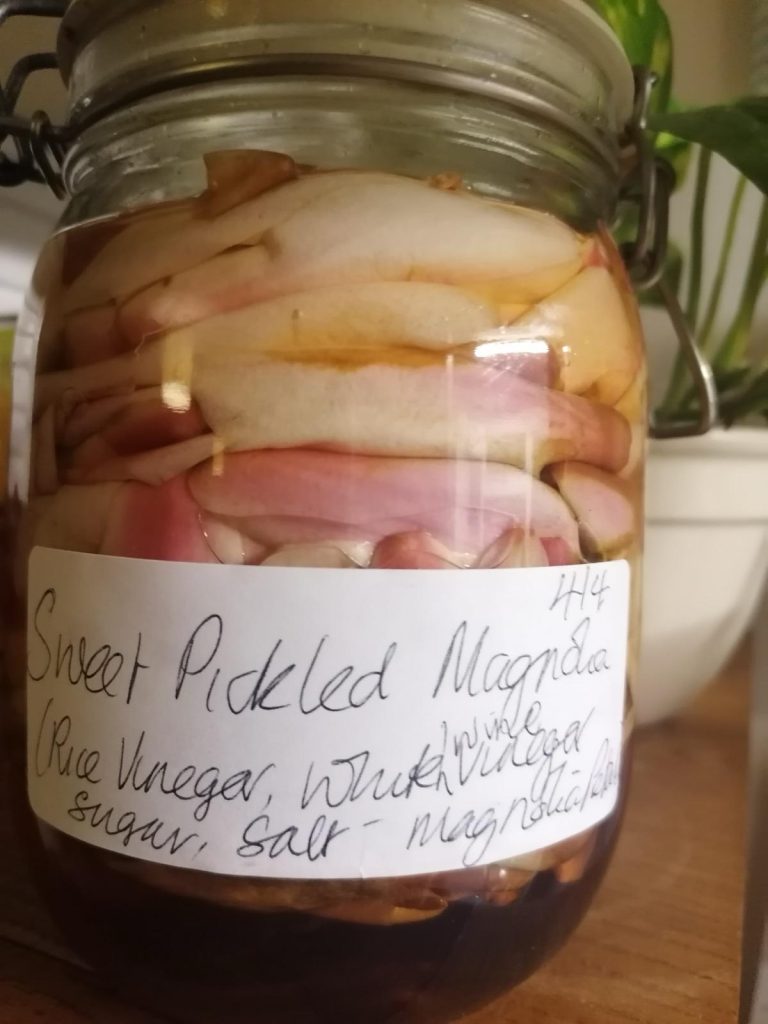
Sweet Pickled Magnolia petals are an absolute hit. These are a fridge staple every year. And I hate to admit it but I prefer the pickled version than fermented magnolia petals on their own. I will have to share this recipe with you! As for fermenting Magnolia petals I love to mix them into kimchis to be honest. My favourite being Rhubarb kimchi, Wild garlic kimchi and a Summer fruit and petal kimchi and all of these tend to have magnolia petals in for the gingery spicy taste they offer.

This Magnolia pickle is a stunning side to sushi dishes, wrapped into Vietnamese style rice wraps, along side a venison steak, chopped into a salad, or used as a base for a floral vinaigrette.

This has to be the best way to capture this crisp wild ginger spice.

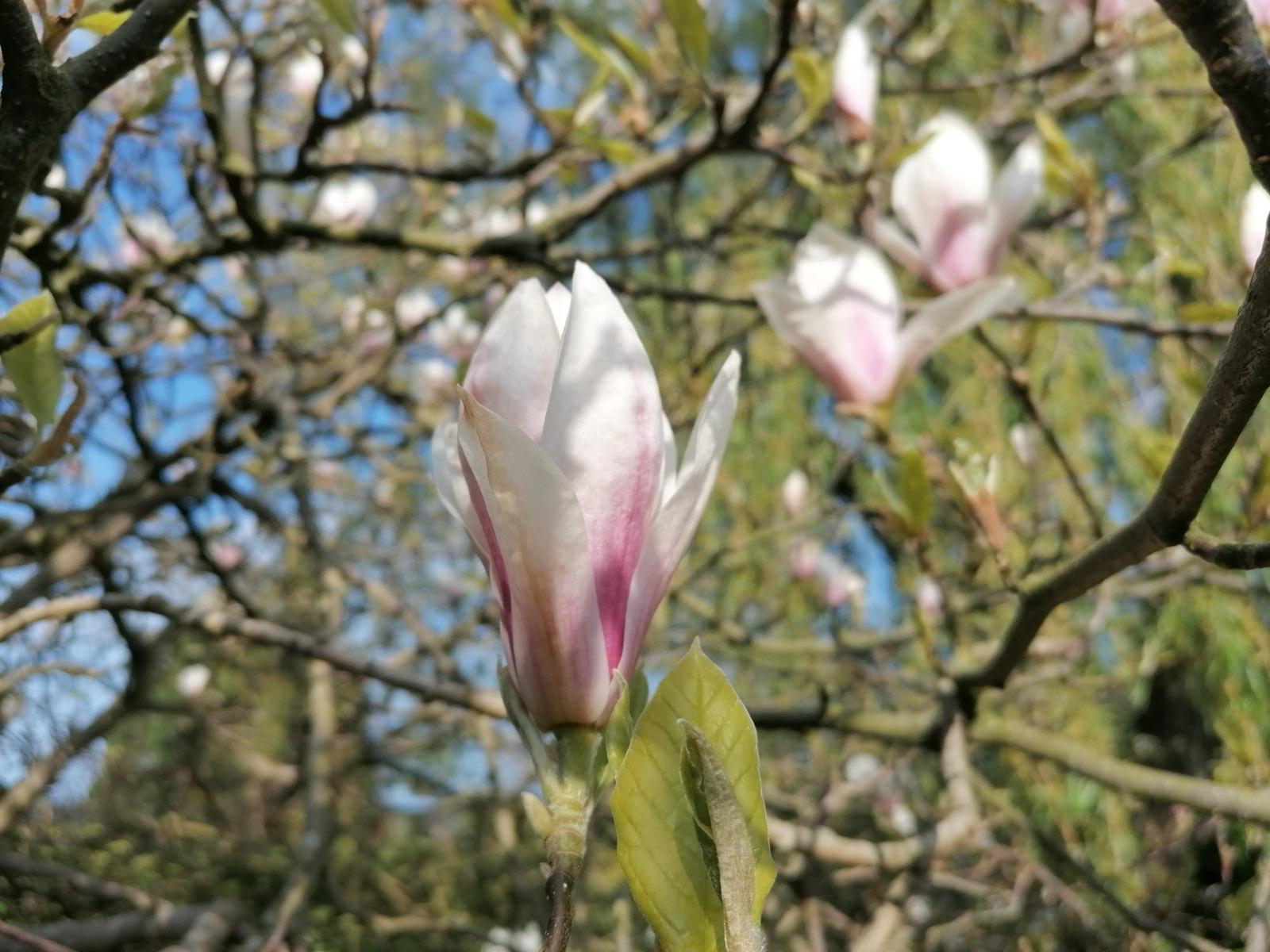
When picking the Magnolias, the aim is to pick the Magnolias that do not have any brown on them and that are just opening if you can. Pick considerately, and by that I mean pick so you can’t tell you have done so, a couple of handfuls per tree and only what you need.

Spend some time to separate the petals out and dust them down to ensure there aren’t any little creatures joining the pickle party. Separate the central stem from the petals and set a side as you can pickle these too. They do have a stronger pickley taste to them.

Ingredients:

  • Fresh Magnolia Petals: (Enough to pack your jars tightly).
  • Light Vinegar: I prefer to use Rice vinegar for this pickle but you can use White Wine Vinegar or a mild Apple Cider Vinegar (ACV) about 200ml
  • Sweetener: White Sugar (for the clearest colour), Honey, or Maple Syrup about 100g
  • Salt: I use 1 tsp
  • Optional Aromatics: A few peppercorns or a small slice of fresh ginger to lean into that spice profile or better still with nothing else added at all.

The Method:

  1. Prep the Petals: Gently pull the petals from the green base. Wipe away any grit with a dry cloth. Pack them snugly into sterilized glass jars.
  2. Make the ‘Sweet & Sharp’ Brine: In a small saucepan, combine your vinegar and sweetener in a 2:1 ratio (e.g., 200ml vinegar to 100g sugar/honey/maple).
  3. Heat Gently: Bring the mixture to a simmer over medium heat. Stir until the sugar or honey is completely dissolved. Add a pinch of salt.
  4. The Pour: While the brine is still hot (but not boiling), pour it directly over the petals in the jar. Use a clean spoon to push the petals down, ensuring they are completely submerged.
    • Note: The heat “sets” the colour and softens the petal slightly, allowing the spice to infuse faster.
  5. Seal and Infuse: Wipe the rim of the jar, seal tightly, and allow to cool.
  6. The Wait: These are technically ready to eat once cold, but the flavour is best after 48 hours. Store in the fridge for the brightest colour; they will keep for months. You won’t be disappointed!

Magnolia

Magnolia Magnificance  Magnolia Magnolia sp The Latin name Magnolia for this family name of shrubs was named to honor the French Botanist Pierre Magnol. Pierre Magnol was an innovator and involved in the creation of the classification of plant families. It also...

Nettle, Pear, apple and Kombucha fruit leather recipe

What to do with the left over nettle mash? Mash from making either Nettle cordial or making a sweetened nettle brew to make nettle kombucha Whizz it up with pear and apple puree and kombucha scoby and you have ridiculously tasty fruit leathers (they are pretty sweet,...

Nettle Kombucha

This is a recipe for those that have a spare kombucha scoby and starter liquid.. A Spring seasonal hit.. and now the spring nettles are getting to just the right point to pick. So this is the time for the first batch of nettle kombucha. I love the pink in the leaves....

Fermented Wild Garlic Pesto

Fermented Wild Garlic Pesto Pesto is a traditional Italian sauce that originated from Genoa. The name pesto is derived from the Genoese word "pesta" (to pound or to crush)  It basically refers to any ingredients crushed using a pestle and mortar. Typically it would be...

Wild Garlic

Wild Garlic (Allium ursinum) Wild Garlic (Allium ursinum) Common names:  Bears garlic, Bears leek, Ramsons, Wood garlic, Broad Leaved Garlic The latin name ursinum refers to the fact that the bears used to like to eat the wild garlic.  Now is the time! That...

Zero-Waste Brewing: How to Turn Pineapple Scraps into Gold – Tepache Recipe

Having been fascinated by fermentation since 2012 and how it changes food into some of the most delicious flavours I have have ever experienced. I haven’t come out of the rabbit hole of learning about fermentation and there is no end in sight! There are so many...

A simple sauerkraut recipe

Photo of many delicious and colourful sauerkrauts created at an Autumnal sauerkraut workshop. Lacto-fermentation Sauerkraut was the opening door into the fermented world for me 15 years ago. The first ferment I was taught was sauerkraut. I had no idea about fermented...

Nettle and Wild garlic Sauerkraut

Nettles are perhaps my favourite wild green.. even with it's stings designed by nature to protect itself, I'm willing to take the sting to harvest it with thanks! This is a Spring green I really look forward to and will be on it's way soon! Harvested from clean...

A gentle pathway into the world of foraging.

If you are beginning your foraging journey.. Before stepping out with a basket, just take a pause... We are all custodians, caretakers of the natural world. We all used to be deeply connected to the earth; that memory still lives in the body. The more of us who...

Is Foraging actually legal?

Picking young nettles in the Spring.